The Power of Giving back

The Power of Giving back

Divya Pasupuleti, Executive Manager at nbn, has been working extensively throughout her career to champion gender equity across countries. As a female from a culturally and linguistically diverse background, she is extremely passionate about creating equal opportunities for women in the Australian workforce. So, it comes as no surprise then that she was a finalist in the Gender Equity Awards – Recalibrate.

For Divya, it all started in India with her father, a doctor, who instilled the value of giving back to the community. He was known for providing support to those less fortunate and in need, through free medical camps. With such a great role model in her life, it was only natural that Divya would want to contribute too. While at school, she took the initiative to work for ‘Divya Disha’, a Not-for-Profit organisation (NFP) with UNICEF, that championed women’s and children’s rights, especially those from socio-economically diverse backgrounds. Despite her young age, it was not long before she became president of the South India chapter.

“Back in my home country, India, I was very fortunate to be brought up in an environment where equality and diversity was celebrated, and I was actively encouraged by my parents to challenge biases, call out discrimination and practice active inclusion,” says Divya. However, she quickly realised that most of her childhood peers did not have the same liberal upbringing, many of whom were encouraged to marry at a young age or deprioritise higher education and a career to meet societal expectations. At a young age, Divya recognised the need for gender equality in society and the workplace and the importance of advocating through equity. For the past two decades, this has been her driver and she has worked extensively to champion gender equity across countries.

In Australia, her early career was with a leading telecommunications organisation, where she was often in a male dominated environment and the only female in the room. When faced with challenging situations and inappropriate behaviours coming with inequity and biases, she recalls some of the early advice she was given at the time was ‘learning to deal with it’. Whilst this advice did help her build the courage and confidence to manage situations as they occurred, she says “it requires much more than women ‘dealing with it’ to fix the problem – it needs colleagues and managers calling out biases, it needs education and awareness, and efforts of the entire work ecosystem”. Divya notes that whilst, these days, there is much more awareness and support in the workplace, there is still a lot more to be done to ensure a fair, respectful, and inclusive playing field for women across all organisations and industries.

Divya has had a stellar career to become an Executive Manager at nbn with responsibility for Strategy, Performance and Operations for Business Segment. She reflects that she sometimes has faced imposter syndrome, wondering if she deserves the professional success and achievements she has experienced, or if she just happened to be ‘in the right place at the right time’. She notes that her imposter syndrome doesn’t stem from a lack of confidence in her abilities but rather from years of exposure to systemic practices and conditioning. “When you don’t often see culturally and linguistically diverse women like yourself thriving or succeeding in a career path you’re on, you tend to question if you belong there,” says Divya. This is why she strongly believes in the power of role modelling, mentoring and hearing the stories of other women who have faced similar challenges. Today, she feels more confident in her ‘skin’, but it has taken several years to achieve this.

For many women of diverse cultural backgrounds, she notes there is often a ‘double-glazed glass ceiling’ in the workplace, which can be doubly hard to crack. For this reason, she actively works to champion diversity and mentors to build confidence in other women. At nbn, Divya leads the Events & Opportunities pillar for nbn Equals, a committee sponsored by Executive leaders to support gender strategy and equity in the workplace. Divya has delivered multiple events within nbn, supporting employees on critical topics including career progression, mentoring, and support at important life stages, such as parental leave and busting the stigma around it. She is very proud of the ‘When She Talks’ program she started that shares unfiltered stories of women’s career journeys, which she personally finds enlightening and uplifting.

With a mission to give back to her community, Divya lobbied on the board of the not-for-profit organisation, Arts Assist, with the goal to make it more diverse. It was largely a homogenous group when she joined, with less than a quarter female representation. She soon became Secretary of the Board and has been responsible for leading the strategic direction of the organisation. Divya spearheaded several initiatives, but closest to her heart is the one to diversify the board, resulting in more than 50% gender representation. She is very proud that the current board is not just gender diverse but includes diverse industry experience, cultural backgrounds and lived experiences. “It definitely was not easy and required having many challenging conversations over the last four years,” she says. Having a diverse board has enabled Arts Assist to access and disburse grants to local artists and community groups, ensuring multicultural groups are represented.

Divya continued to take on more board and advisory roles.  As the Non-Executive Director for Project Management Institute (PMI Melbourne), she is very proud of the initiative she delivered in 2021, where project managers were connected to charities and NFPs in Victoria, on a pro-bono basis to deliver community critical projects. More than 1,500 hours of volunteering were allocated to the amazing work of charities such as Wildlife Victoria, Leprosy Mission, Humour Foundation and Cultural Infusion, resulting in enormous community benefits. In her role as an Advisory Committee Member for the National Association of Women in Operations (NAWO), she provides advice to the Board and Executive team on strategy, especially from an intersectionality lens.

When asked what is next, Divya is excited to be playing a pivotal role in leading and governing the 2022-2025 Gender Equity Strategy for nbn. She is a strong advocate of the culture nbn has built to foster a diverse, equitable and inclusive workplace that helps its people bring their whole selves to work. She is proud of the work nbn is doing to be a leader in the Australian landscape for Diversity, Equity and Inclusion in the workplace.

There is no doubt that Divya will seek out more community involvement, as clearly the power of giving back is what motivates her. Her advice to others who want to make a difference? “Don’t try to fit in, be proud of being different and own it.”

If you would like to learn more about the other finalists then click this link.
An Affinity for Infinity

An Affinity for Infinity

Amazon’s mission is to be the earth’s most customer-centric company, and this mission is central to their work in inclusion, diversity, and equity. “We are committed to doing our part to ensure all technology is developed in a way that’s inclusive, diverse, and equitable in all aspects, including gender,” says Michelle Hardie, Head of Strategy, Operations, Enablement and Engagement. “Inclusive, diverse, and equitable teams have a positive impact on our products and services, and help us better serve customers.”

Amazon Web Services is part of the Amazon group of companies, ranging from household names like Audible, Amazon Prime and Amazon.com. To create a feeling of connectedness and inclusion, Amazon created Affinity Groups. “The thirteen Affinity Groups comprise over 90,000 Amazonians across hundreds of chapters around the world who passionately and positively impact our company, each with an executive sponsor that ensures these groups are engaging at every level of the company,” comments Michelle. Some examples of Amazon’s affinity groups include the Black Employee Network, Glamazon (Amazon’s LGBTQI+ Affinity Group), Indigenous @Amazon, Women at Amazon, Mental Health and Well-Being and Amazon People with Disabilities.

Through these groups, employees learn of different individuals’ journeys, their careers and how they arrived at where they are today. This is done through events including “a day in the life of,” panel discussions and social networking. These events provide a combination of inspiration and practical how-to knowledge which individuals can then explore with their mentors. The outcome is a supported and engaged workforce as there is so much opportunity and scope for growth.

The Affinity Groups are also voices advocating for change. One of their notable achievements has been to have breast feeding rooms installed in offices. Another was to change the office space in the wake of COVID to include both a library space where a team can work in quiet and a casual breakout space where teams can brainstorm.

For individuals keen to drive change and make a difference, there is the AWS Inclusion Ambassadors Program which was developed to quickly and broadly amplify the inclusion and diversity work being done at AWS. The Inclusion Ambassadors Program helps employees connect with others who share their interest in becoming allies, advocates, and agents of change. “Ambassadors drive communications for culture-enhancing events such as inclusion forums, accessibility labs, and town hall conversations happening within our organisation,” says Michelle.

Another internal initiative designed to support the development of senior and diverse leaders is the ‘Sponsor for Success’ program which provides employees with a sponsor from another country designed to encourage and create opportunities for the individual to progress.

Not all the work on diversity and inclusion is focused internally. The team at AWS are passionate about creating the future pipeline of young women into the technology industry. They have formed community collaborations with Code Like a Girl and the Tech Girls Movement Foundation, as well as creating community events like the AWS Girls In Tech Day, where schoolgirls are inspired and can explore technology and potential career pathways. One AWS team member, a new graduate, could not believe her luck in being able to spend a day sharing her knowledge and enthusiasm with Year 8 & 9 school students. The opportunity to “open their eyes” to the possibilities was very rewarding.

At a recent Girls in Tech community event, Michelle Hardie shared her experience of a young girl with an insatiable curiosity that kept coming back to her every half hour or so with new questions. “How had she got into an IT career?” “What subjects had she studied at school?” “How had she gone from programming to sales?” It was initially playing with the robot dog that had inspired the student’s interest and by the end of the day she was hooked. Michelle left feeling proud of AWS’s involvement and impact.

With all these initiatives it is no wonder AWS were finalists for the Gender Equity Awards, Recalibrate. It is this unique combination of employee and community engagement, externally and internally, that is both genuine and meaningful,  helping to create a huge amount of trust for employees knowing they are individually valued and have a voice where they work.

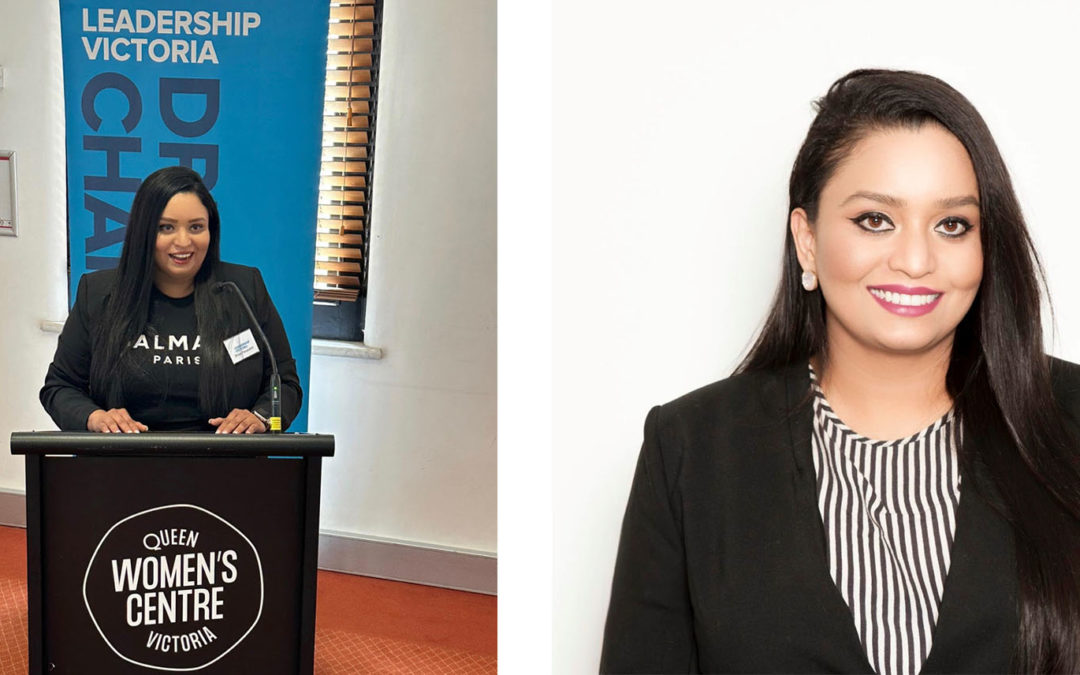
Photo names: [L to R] Saliya Katungu-Moran, Michelle Hardie, Sumal Karunanayake, Judy Cole, Jamie Simon, Sharon Rode, Nick Blamey, Mary Law, Pela Markogiannakis, Andy Hindmarch and Georgia Mitchell

If you would like to learn more about the other finalists then click this link.
Protiviti Amps up Inclusivity to Improve Equity for All

Protiviti Amps up Inclusivity to Improve Equity for All

Global management consulting companies often pride themselves on their consistent approach to gender equality in various countries while achieving mixed results across the board. Rather than following this pattern, Protiviti has taken a unique approach to build an inclusive workplace culture in Australia by working to adapt to the unique needs of their people. In this way, they are working to support all people to feel valued with a focus on those groups that are not well supported or understood like our first nations people and transgender individuals.

Unconscious bias training has been pivotal in achieving their success. It has led to an acceptance that everyone has different biases. The team are now able to have robust discussions where someone can ask for help because they are concerned their approach is biased while others can call out examples which appear biased so the discussion can ensue. Ghislaine Entwisle, Protiviti MD shares that, “whilst initially it was very uncomfortable for everybody, it was very thought-provoking.” One of the great benefits is it allowed Protiviti to explore the day-to-day activities and uncover where unconscious bias most often occurs.

Chantelle Salas, HR Manager, shared that it has been the basis for great discussions in performance reviews. “In the past, the team might have been defensive. Today, the team have the tools to have a robust discussion. For instance, it is okay to say, ‘I am going to challenge this because I think your comment shows unconscious bias.’”

To take this further, they have done training to better understand the process of people changing genders. Everyone who participated was touched by the “rawness and authenticity” of those who presented it. It opened up their understanding of why publishing a person’s pronoun is so important. Ghislaine explains, “by denoting that she is a she/her it demonstrates acceptance that others can choose their pronouns without judgement.” This a powerful message for both the team and their clients.

Leading the way globally, Protiviti embarked on their Reflect Reconciliation Action Plan (RAP). Through the process, they came to a better understanding of first nations culture and their needs. Today, management works to support them through employment and procurement. It started with understanding and awareness. A pivotal stage was when the team reflected on what they wanted to be passionate about. One initiative was to commission a piece of artwork which encompassed their vision. Today, this is proudly displayed in their office. As they have their staff and clients at the heart of this vision, everyone was given a gift with the art. Now, many other offices have adopted this approach to dealing with their own indigenous cultures.

Management at Protiviti works hard to support their team members to succeed as individuals. They are very proud of the fact that their entire team will be considered for a pay rise, whether on leave or not, so all receive “market-relevant salaries”. Similarly, if they come across a talented person to recruit, the fact that they may be pregnant does not go against their chances of success. “It is about the best person for the role and being in it for the long haul,” says Chantelle.

Stacey D’Cruze, Associate Director, commented on Protiviti’s culture “I was 22 weeks pregnant when I started at Protiviti. To be given the opportunity to advance my career and become a parent in the same year felt like a dream. The support and flexibility I have received from senior leaders and the team before, during and after maternity leave is a testament to Protiviti’s great culture and inclusivity.”

Accordingly, their parental leave policies are very inclusive and family friendly. They have changed the wording so there is no distinguishing between primary and secondary carers resulting in the same paid benefits available to all parents within the first 24 months of childbirth or placement. This has led to increased adoption by both the men and non-birth parents in the team and those that would have traditionally been described as secondary carers. For Chantelle whose partner is pregnant “the introduction of their gender-neutral parental leave policy, allows the same paid leave benefit for both birth parents and their partner. Along with the flexibility and choice to take the leave in a manner that suits employees and their families. I am lucky enough to work for a company that recognises and supports that both parents play an active role when it comes to parenting and I look forward to being able to take time off with my partner as we both navigate being a parent”.

Another great initiative is the bonus 20 days return to work premium each employee receives to use within the first 6 months of returning from parental leave. This suits some employees to initially work 3 days and get paid for 5 days using the return-to-work premium. 

As you can imagine with these parental leave initiatives, their open recruitment and inclusivity policies, Protiviti had become a great place for women to work. Like many other finalists in the Gender Equity Awards, their approach to solving female issues has created a workplace culture that embraces the diverse and is openly inclusive for all.

Breaking Gender Barriers

Breaking Gender Barriers

Grant Thornton is a world-leading organisation made up of independent assurance, tax and consulting advisors. Operating within the accounting industry, they have traditionally faced a lack of female participation, which notably declines as senior leaders move to the Partner level.

To drive change, the firm decided on a purposeful and proactive approach to their gender equity goals. Hollie Coleman, National Diversity and Inclusion Lead noted that the Gender Equity Action Plan is to achieve and maintain gender equity at all levels of the career structure within the firm by removing structural barriers to gender equality.

Although the talent pipeline is relatively balanced up to the Director level, the number of women advancing to Partner was disproportionate to their male colleagues. By listening to their people through targeted focus groups and direct feedback channels, they were able to understand the real and perceived barriers to advancing to Partner as a female at the firm. The focus is on driving cultural change, improving internal networks and visibility of female leaders, as well as raising awareness of gendered issues in the workplace more broadly.


Key initiatives

One of the initiatives under the Gender Equity Action Plan is an inclusive sponsorship program where each Sponsor supports a future leader through their career journey by providing active sponsorship, as well as (but distinct to) mentoring and coaching. The program focuses on upskilling sponsors first and foremost, while supporting and encouraging future leaders.

A Gender Equity Network (GEN) group was also set up to support women and gender diverse people by building a strong network of members and allies working together to create awareness and understanding, promote conscious inclusion, advocate for gender equity, and strengthen the pipeline of diverse talent for leadership roles. GEN was established on the basis that gender equity is everyone’s business – today one third of the members of GEN are male allies.

GEN launched GENerator Circles, which are “lean-in” groups of up to 12 individuals in local offices where women can meet to expand and strengthen internal networks, grow skills and confidence, and help each other achieve personal goals. This has helped participants discuss and strategise issues from imposter syndrome, and managing their mental load, to identifying their individual circle of advisors. Whatever the challenge, the circles provide support, empathy, understanding and a safe space to speak. For Daniela Baggio, a Manager in the Corporate Tax team, the initiative has been incredibly positive, “Having a dedicated way to channel interest in gender equity in the firm, and to access the support shared in these circles as part of my normal working day is unreal to me. I have personally benefited so much from being part of our GENerator circle and the deeper relationships I have formed has been helpful for day-to-day work activities.” 

The importance of allyship

Other key barriers to women stepping into Partner level identified were the lack of informed and proactive allies, and the need to build networks to generate business and the team at Grant Thornton Australia has set about to systematically remove these barriers.

The concept of allyship was important to provide understanding, encouragement and support across the organisation. “Allyship at Work” training was piloted to build a greater understanding of gender equity issues, the role that privilege plays, and how men could be better allies at work. According to Jarrod Lean, Partner in Risk Consulting, the training has been very beneficial for him, ”The Allyship at Work training was thought provoking and engaging. I think everyone came out of it learning something, and most of all having more awareness of how to be a better ally. It has changed the way I approach interactions at work for the better, and I highly recommend other allies to attend future sessions.


Business development initiatives

Demystifying business development is a key element of the Gender Equity Action Plan, with one of the major initiatives of the program being the internal and external networking opportunities. The Adelaide office has partnered with a local law firm and a Big 4 bank to provide networking opportunities for professional women to regularly meet, allowing the team to build local networks, form potential collaborations, and share cross-business referrals.

The Sydney Financial Advisory team have also set up a women’s network where they regularly meet to discuss topical issues or hear from guest speakers. Holly Stiles, FA Partner and the Executive Sponsor of GEN says, “We have seen very powerful results from our ’Women in Leadership series, including career progression, increased confidence and higher retention rates. Many women have commented that it has been incredibly helpful to discuss issues and to realise that others share similar challenges. The circles have provided a forum for women to share strategies to overcome barriers in their careers and a network of colleagues who support each other.”

The team at Grant Thornton Australia are proud of their work that aims to systematically remove the barriers holding women back.  They are at the leading edge of action with their Inclusive Sponsor Program, Allyship program, GENerator Circles, business development support and networking opportunities. Other initiatives include 26 weeks of paid parental leave including superannuation on the 26-week unpaid portion, flexibility, support and resources for caregivers, and domestic & family violence support.

All these initiatives mean they are well on their way to achieving their gender equity goal: to create an inclusive environment where career aspirations can be realised regardless of gender, and where women and gender diverse people are as equally represented as men all the way through to Partner level. 

If you would like to learn more about the other finalists then click this link.
Balancing Gender for Optimal Emergency Response

Balancing Gender for Optimal Emergency Response

Meet Dr Faye Bendrups, currently Vice Chair of National SES Volunteers Association. She is well known for her work to increase diversity and improve the workplace culture of the SES. As an emergency services frontline responder for over 17 years, she has served in multiple leadership roles and is proud to have supported numerous women into leadership roles at all levels. Her advice to women considering joining the emergency services is, “You can’t make the change if you are not in the room.”

Many would consider the SES a male-dominated organisation based on a hierarchical military structure. Today that is changing. Dr Bendrups says, “I have advocated for and strengthened the input of women and others from diverse backgrounds.”

It all starts with recruitment where they aim is to have a gender balance across the total force. A key initiative to enable this has been the presence of women on interviewing panels and showcasing them as roles models. Another is the emphasis on providing training to everyone, regardless of their gender. These days, no one is excluded for not having skills so both men and women who do not know how to use a chainsaw or drive a truck are trained to do exactly that.

Once engaged, all recruits are offered training opportunities in a safe and supported environment. Mentors are provided and all recruits are supported to succeed. For example, one young woman recently completed her Cert. 4 in Leadership and was encouraged to lead her unit. She had excelled as a self-starter and always delivered yet did not see her own potential. Through mentoring, she was encouraged to step up. Eventually, she became confident earning the respect of her team as a good leader. In her day job, she has embraced leadership too and her training in the SES was integral in giving her the confidence to go for a promotion interstate. She got that job and continues to progress her career. She is now leading multiple statewide divisions.

Dr Faye Bendrups meeting with General Murgueytio, Chief of Civil Defence, Peru

Dr Bendrups has been a truly inspirational leader. She is one of only a few women nationwide to be trained as an Operations Officer, a Safety Officer, and a Base Camp Manager for bushfire response operations. For her service during the 2019-2020 bushfires, she received the National Emergency Medal.

A particularly influential and controversial project she developed was a survey on Culture and Conduct in the SES. This revealed hundreds of cases of bullying, sexual harassment, coercive control, and other discriminatory behaviours. It led to a complete renovation of SES systems and a determination by the whole organisation to commit to organisational change, greater diversity, and an overhaul of cultural practices.

Being in the SES is not easy as it requires a time commitment of training one night every week as well as time on call. This is particularly challenging for single parents. One unit decided to overcome this hurdle to provide childcare. Whilst getting this approved wasn’t easy, they are proud to be able to provide this opportunity to single parents.

The benefits of inclusiveness were evident to Dr Bendrups when she was the recipient of an Emergency Services Foundation research grant and was seconded to the National Institute of Civil Defence, Lima, Peru. Peru suffers from 400 earthquakes a year and they have developed a unique approach to emergency response. Four times a year, the entire nation stops to participate in a drill. So when the alarm goes off to indicate the drill, everything stops (schools, businesses, even the cars driving along the roads) so everyone can get to their appropriate station. Bendrups found it an amazing experience as she realised emergencies are everyone’s problem and everyone has a part to play.

She has learnt from this experience and is looking to collaborate with councils to establish a series of community action plans in Australia. She recently cited the flood problems we had in Melbourne with the Maribyrnong River overflowing and flooding various homes and businesses as one typical situation in which the community could have played a bigger part. Although she quickly points out, she is not suggesting they all become SES volunteers. What she saw in Peru was the community doing simple, achievable tasks that freed up the emergency workers to concentrate on the complex and critical activities.

Today the SES promotes inclusiveness across the board including race, sexuality, and gender. A sign of this culture of tolerance and trust is that several gay and lesbian recruits have felt comfortable to “come out” with their teams. It is this confidence and trust that builds the team cohesion leading to better outcomes when under the pressure of an emergency situation.

To see the other finalists go to https://aij.dzr.mybluehost.me/website_40de3b07/