An Informed Voice for Change

An Informed Voice for Change

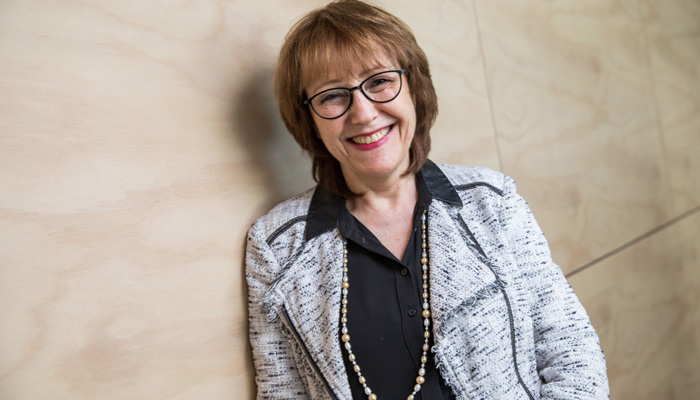
Professor Lucy Taksa has spent her working life being an informed voice for change. She has worked with, numerous universities, various NSW Government bodies and not-for-profit organisations and today is a Professor of Management at Deakin University’s Business School in the Faculty of Business and Law, after having been a Head of Department, Associate Dean, and Research Centre Director at the University of NSW and Macquarie University. Besides these leadership roles, she also chaired the Board of the NSW State Archives and Records and was a non-Executive Board member of Settlement Services International Ltd. To date, her research has focused on the organisation of work, equity and diversity management, migrant employment and entrepreneurship, representations of women leaders and heritage management.

Lucy arrived in Australia as a child with her parents so understands many of the challenges facing migrants. Throughout her education, she was lucky to be supported by some amazing women role models who promoted economic and educational aspirations for young women. Their encouragement played an important role in supporting her to become the first in her family to attend university. “They taught me the value of advocacy and thought leadership and in turn, I have worked to emulate these mentors,” says Lucy.

Her appointment as a member of the NSW Equal Opportunity Tribunal (later part of the Administrative Decisions Tribunal) gave her first-hand exposure to many cases of discrimination. These varied from sexual harassment and race discrimination to disability discrimination and increased her understanding of the complexity and inequity that many women face in our society. This motivated her to take action to promote equitable outcomes for women in every organisation she has worked for. She developed and taught a course on Managing Equity, Diversity and Disability at UNSW and included diversity issues in all the industrial relations, human resource management and organisational behaviour courses she taught.

At the University of NSW, she was proud to chair and administer the Vice Chancellor’s Childcare Assistance Fund for Women Researchers. This fund made it easier for women academics to maintain their national and international research profiles after having children. It supported their career aspirations by enabling them to travel to conferences. The exposure of their research had a hugely positive impact on their career and faster progression.

Still at the University of NSW, she was a member of the Gender Equity Strategy Committee and played a pivotal role in the introduction of a mid-career women’s mentoring scheme at the Australian School of Business. The mentoring helped women navigate the system and gave them the confidence and social capital needed to progress their careers.

At Macquarie University, she introduced the NSW Government’s Lucy Mentoring Program to the Faculty of Business and Economics. This enables young women to learn from government and industry leaders. “Lucy” is an innovative leadership program with a primary focus on women in university studying business, finance, economics, accounting, and law. Lucy explains, “It is not named after me, but it does an amazing job of providing opportunities by widening their network and connecting them to possible jobs.” 

“If we have a voice, we must exercise it.”

Lucy does not mind being controversial. In her role as MC for the NSW CEDA Women’s Leadership program some years ago, she sought to challenge some of the norms relating to gender and age. She believes this is important, especially in public forums. A great example of this was when she opened events with a  “Welcome everyone” greeting, deliberately dropping the reference to ladies and gentlemen. Something simple that was appreciated by many of those attending. In another example, she questioned the phrase “bringing your whole self to work”. She believes that for some people there are important aspects of their lives they would be happier leaving in the privacy of their homes. Ultimately, she can see a need to continue to challenge the norms that support male stereotypes and masculine behaviour in the workplace, and she hopes to see some new inclusive norms being created.

Much of her recent focus has been on ‘diversity washing’, a term that describes when organisations market and brand their support for diversity but on deeper inspection do not embed inclusion into their processes or accountability for ensuring it is practised. In an OECD survey of 432 human resource managers conducted with the AHRI (Australian Human Resources Institute (AHRI) in 2018-19many respondents commented on the need for leaders not to just to talk the talk but also to walk the walk.

Today, she can see changes happening within academia as more women are being employed in leadership roles. In the past, women were expected to fill highly feminised roles. Now it is important for women in leadership roles not to be seen solely as ‘mothers’ who can fix operational problems, care for others and mediate between staff and students. Women leaders can make important contributions to strategy, she argues. Deakin University is progressive in this regard. She continues to play an active role in collaborating with scholars from around the world to expose the history and importance of women in a variety of leadership roles and women’s corporate networks. She has become a role model and mentor to many women across the organisation.

When asked what drives her, she mentions her migrant background and the importance of her family placed on dreaming of a better world in Australia far from the war-torn Eastern Europe they grew up in. She believes no single person can change things alone. It takes a community. However, those with the knowledge, commitment and capacity should be the change makers. Lucy says, “If we have a voice, we must exercise it.”

LEARN MORE 


The Consistent Diversity Champion

The Consistent Diversity Champion

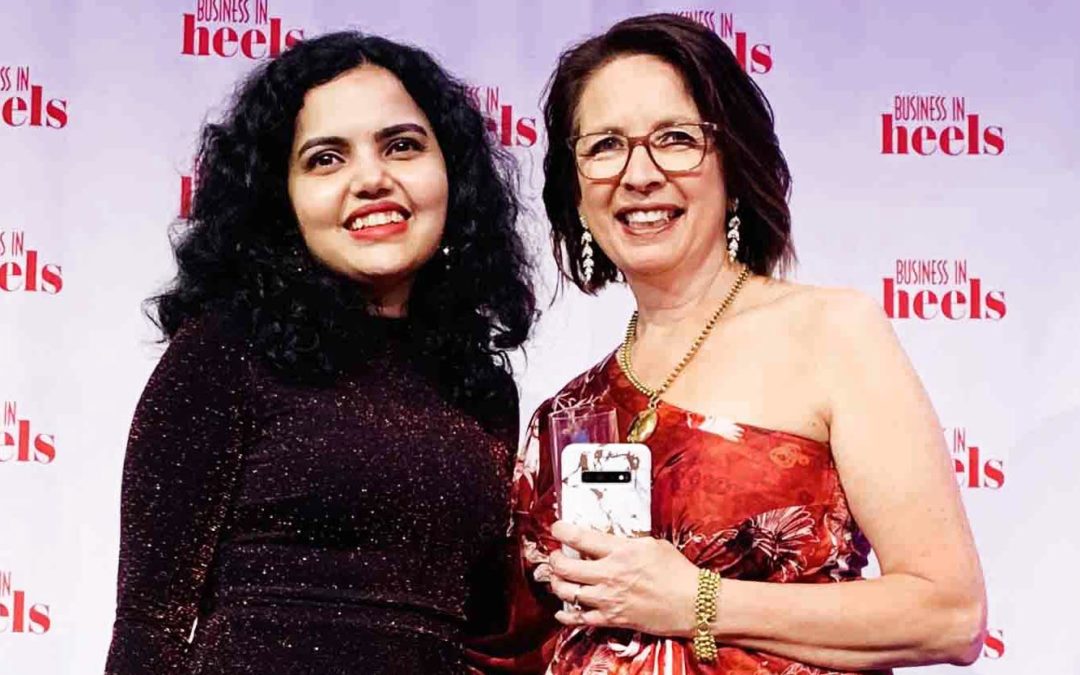
Sheeza Shakeel has consistently championed and supported women from the time she left school.

Though she was born in India to an orthodox Muslim family not known for modern educational pursuits, she showed exceptional academic talent early on to receive support from her parents to focus on and value education. “She went on to not only complete an engineering degree in Computer Science and master’s in management (MBA) but graduated with distinction by topping the university”

One of Sheeza’s early endeavours at championing women’s cause came while she was at the university, where she chose to do a project that would make a difference. She collaborated with the Sri Ram Foundation to set up low-cost Sanitary Napkins production for poor and disadvantaged tribal women. The challenge was twofold, how to convince them of its usage benefits and find resources to invest in sanitary products, both very hard asks for those more in need of food and lacking basic education. However, against the odds a factory under the CSR initiative was set up where these women were trained & employed to help generate income and with that access to food and sanitary products. Today, it is still running successfully.

After completing her MBA, she took up a sales career in India working in technology. A career that would enable her to interact with people, travel around the globe and explore new things every day. After a year Sheeza was transferred to Australia. Her sudden move was fraught with a few challenges because Indian Muslim women do not leave the country generally unmarried. Despite these challenges, Sheeza eventually made it through the gender-biased red tape to come to Australia. “where she didn’t know a soul”.  

In Australia, Sheeza was keen to champion the cause of women. She started working with the Australian ABCN Accelerate program, an online mentoring program supported by Accenture.  It involved mentoring exceptional girl students who are facing significant economic, family and/or social challenges in society. One of Sheeza’s mentees was a young girl who had fled from Syria with her family and struggling to fit into Australia. Her challenge was having to work with her siblings to support her family because her father was ill & unable to work. Between school and work, she had little time to herself but dreamed of being an engineer or an architect. Exhausted and overwhelmed she found motivation & encouragement from her mentor and made the effort to study. Today, she has made it to the university. Sheeza comments that “Mentoring is a two-way street; she is inspired by this young person’s drive and determination.” Whenever Sheeza feels demotivated, she reflects on what this young girl has had to do to achieve her dreams.

Other initiatives Sheeza embraced involved coaching and counselling housewives towards entrepreneurship. Given her knowledge of technology, she encouraged them to use social media platforms and to sell through registered kitchens on Facebook and Online Marketplaces. She also worked with the Smith Family and other social organisations as a volunteer to promote social and workplace diversity.

After working with a couple of global multinational organisations, Sheeza joined Accenture to be part of large-scale transformational cloud deals. It was quickly evident that Sheeza was passionate about gender diversity & inclusion, and she was encouraged to be involved with many of the programs offered by Accenture. She has delivered multiple social service engagements that promoted inclusiveness and equality across geographies and organisations. For her work and initiatives, she has been recognised as Accenture’s global champion of Diversity & Inclusion in 2021.

All great actions take inspiration and Sheeza says she was inspired by Accenture’s CEO Julie Steel.  She is keenly supporting Accenture’s targets to get 50:50 by 2025. Her effort to drive diversity and inclusion initiatives included the creation of net new STEM jobs in the Australian market.   When asked, “what’s next, she shares that as the newly appointed Social Mobility Lead, there are lots of possibilities to bring in more women into senior technology roles.”

Angela Advocates Another Way

Angela Advocates Another Way

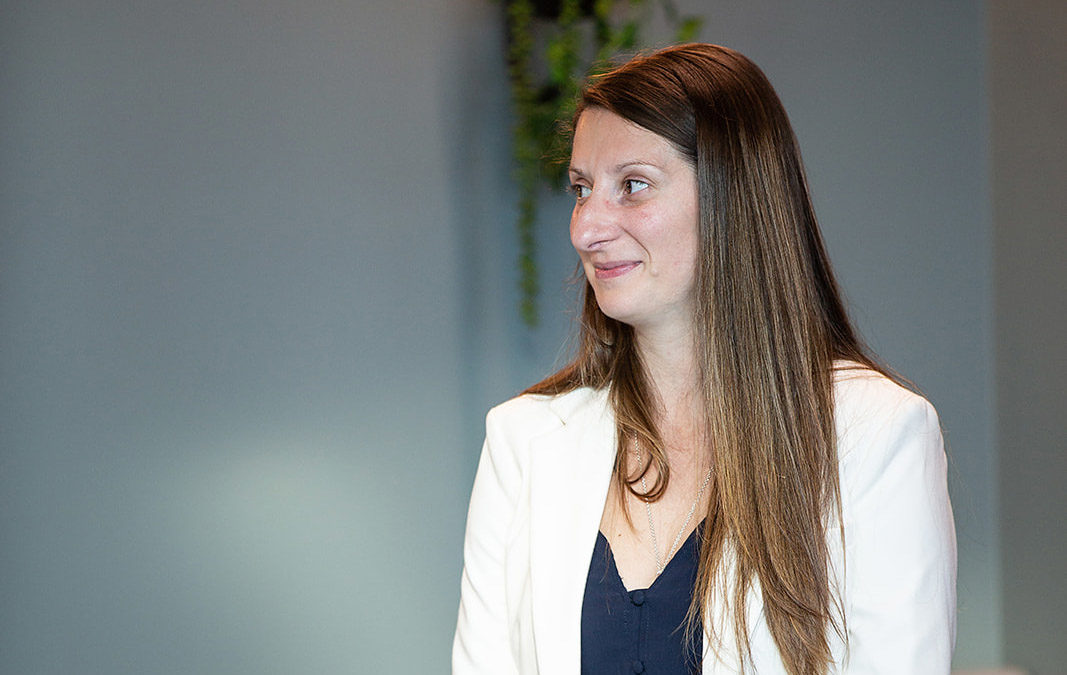
Angela Smith loves being part of the non-traditional law firm, SLF Lawyers. The environment has given her the confidence to advocate for another way beyond the cigars, cognac and wood panelling.

Law is a very traditional, male dominated sector. Right from law school, lawyers are channelled down a path to do things the “way they’ve always been done”. To be successful, you must do what you are told and compromise on your personal life.  For instance, male norms of business demand that informal meetings are still held on the golf course. Angela openly admits she does not like or play golf yet she has (attempted to) play on numerous occasions early in her career because she felt she had to. She also talks about hiding the fact she wanted to have a family because it would be a career breaker.

Today she knows that there is another way.

Angela is passionate about mentoring others and helping them get the most from their careers. This started early when she worked with young graduate lawyers. She shows them they do not have to limit themselves to the “way things have always been done”. Instead, she works to help them build their skills, so they have the tools they need to do things on their own. She believes too many are thrown in the deep end and sent out to deal with clients by themselves with very little training. Whereas Angela routinely goes out of her way to bring them to client meetings and business functions so they may shadow her and see another way of getting things done.

As the partner heading up the Sydney office, she has been able to create a haven for growth with her own team. She runs a predominately female-based office with over 66% of employees being female.  Many have been attracted because Angela has been a strong advocate for flexible work arrangements including part-time and remote working. She is a champion and a role model, openly saying her family and their health come first and encouraging others that it’s fine to have work and life in balance. She has altered the company’s culture significantly, allowing younger female professionals to excel in their career whilst balancing other commitments outside of work.

Her team is very supportive of one another, empowered and they regularly check in to see “how everything is going” showing genuine interest and support. A sure sign of a problem is when someone’s door remains closed for too long. This usually indicates the person is drowning. If that happens, anyone of the team will step in to ensure the workload becomes rebalanced.

Ensuring that SLF is a safe environment for female employees to grow and develop skills is very important to Angela. There is still a lot of inappropriate behaviour in the legal sector from both clients and suppliers. Angela works to support her team should this occur. Sometimes they cannot avoid the communication, but they have a system to ensure it’s all in writing and channelled straight to her. Often, this alone works to the diffuse the situation.

Angela actively mentors’ young females both within the office space and outside. Within SLF Lawyers, both in the Sydney office and nationally, Angela is an active participant in mentoring young lawyers and guiding their professional development. In this respect, Angela promotes and encourages career growth within the organisation and is supportive in all employees’ professional endeavours. She loves creating opportunities for them to step up.

Externally, Angela is a frequent mentor through Business in Heels Mentor Mornings, connecting likeminded professional women of all demographics. Through these events, Angela empowers other professional women, within and without the legal sector, to collaborate with each other, be confident in their professional abilities and courageous in their career pursuits. “I have assisted and mentored approximately 50 female individuals, assisting them in forming other professional connections and ensuring they have a safe platform to learn from like-minded females,” says Angela.

Another of Angela’s activities is her board position at Humanity Matters, a charity aimed at supporting at-risk and vulnerable youth. The charity focuses on engaging with them to facilitate positive interactions with their community, families and other vulnerable youth. This is turn promotes their development so they can acclimate and succeed in society and all other aspects of their lives.

When asked why she is a great advocate and mentor Angela comments, “In order to promote equity in society, it is important to equip people with the means to succeed and the confidence to pursue their goals.”


The Power of a Social Contract – Accuteque

The Power of a Social Contract – Accuteque

Many companies talk about teams being aligned & operating with a common purpose, however Accuteque is unique with its approach to this common paradigm. They have a philosophy that encourages each team member to act independently to advance the company because they feel connected to the purpose. That’s exactly what Olivia Fenton did when she saw the chance to enter Accuteque in the Recalibrate – Gender Equity Awards. She rallied the team who collectively contributed to the effort. Their plan was well underway when CEO, Caroline Patton, became aware. 

Caroline Patton is a progressive woman who, like many people, comes with her own set of family responsibilities. When she became aware of Olivia’s initiative, she immediately saw the benefits. You see, part of her mission has always been to give women a voice and an opportunity to showcase their talent in the male dominated IT sector. 

Says Caroline; “People First is truly part of our DNA. It is reflected in our recruitment, engagement, leadership and even at board level. Today, the majority of our leadership and board positions are held by women which is unheard of in similar companies.” 

Accuteque accepts people for who they are and where they are in life. This may be at the start of their careers, towards the end where they can deliver their expertise to others or by taking risks on those wanting to re-join the workforce by giving women an opportunity after a parenting stint. As a result, they are attracting very experienced individuals and are proud they have one of Australia’s foremost female enterprise architects as a key member of their team. 

Accuteque

Moving beyond policies and procedures, part of what makes Accuteque unique is their social contract. This is an agreement developed by the team and builds on their values to outline what behaviour should happen in certain situations. One example was a statement “Share the load. We are always ready to help. Don’t wait to be asked.” To ensure there is clarity on this, it is explained further; “We are always ready to help. Just ask.​ There is power in being part of a team​. Working together is more enjoyable and you get a better outcome.” Then it goes further; “It doesn’t mean offloading the hard or boring jobs to someone else​. Just don’t do it all yourself.” The company operates with a number of these statements which they keep current with regular review so the whole team feels involved.  

When Accuteque responded to the Recalibrate Gender Equity Awards, the Social contract allowed Olivia to work “with positive intent”. 

As this is so effective for their company, Accuteque will work with other companies and teams to develop their own “social contract” for what is meaningful and important to them. For example, they did this with NAB for the Data Platform team. To deliver the transformation, they needed to be able to work autonomously and have courageous conversations. The social contract implementation backed by the General Manager enabled them to land the project. 

Another shift has been into true hybrid ways of working. Caroline says, “We don’t really care where you work from or what you are doing minute to minute between 8 am and 8 pm. Do what you need to do as long as you achieve your KPI’s.” And like their values, everyone is very clear on the company BHAG’s and the associated KPI’s. In fact, one team member travelled to Vietnam and used his location as a base for work whilst also taking some family time. What made it more remarkable was that he had exhausted his leave and so was not expecting to be able to go. After a discussion with his people leader, he realised that he could work around the planned family event and still get his work done.  

Another key factor has been flattening the management structure. Around four years ago they got rid of hierarchies and today they describe them as “people leaders” or “coaches” making it clear that the behaviour is to encourage and nurture their staff. 

To sum up, Accuteque has a unique way of working that really puts their people first. When asked why this is important, Caroline explains that it’s her role to “leave the ladder out for others and to help them with the climb.” With her championing these initiatives and her team embracing them you can understand why they were finalists in the Recalibrate – Gender Equity Awards. 

Giving Women a Voice

Giving Women a Voice

For Dan Bognar, General Manager at DocuSign in Asia Pacific, giving women a voice is something he is deeply passionate about.

Over his career, this has taken many forms. From mentoring and sponsoring high potential female talent, to creating a safe place for women to work and championing them to raise issues when they have been bullied or harassed, Dan has done it all.

Early in his career, he realised there were many talented young women who had the potential to be great leaders though often lacked the confidence in themselves to see this. He found by demonstrating his confidence in them, finding them opportunities to take on opportunity outside their role and encouraging them to go beyond what they thought possible, they were able to flourish.

One example he shared was of a young woman in the marketing team who became increasingly more uncomfortable as her stakeholder map grew. When asked why she was becoming withdrawn in meetings, he found out it was because she did not feel her voice mattered, that she did not always agree with everyone else and her ideas would not be accepted. Dan, who values a diversity of perspectives & ideas, was able to get her to understand just how valuable her contributions could be in getting the team to a better outcome. Armed with renewed confidence she slowly began to speak up. It didn’t take too long for her to be promoted and she has had a fabulous career trajectory ever since.

As their mentor, female employees have often confided in Dan about situations of harassment or bullying. They go on to share that they only want him to listen and not to act. The women are concerned that if they do speak up, change won’t occur and the worst case scenario is that they will have negative career repercussions a result.  Dan openly admits he is conflicted. As a mentor, he must maintain confidentiality, but as a senior leader he does not condone activities that are counter to the company’s and his own values. He says he is often “aghast at the behaviour of some men”. The only solution has been to address this at the leadership level by being clearer about the values the company stands for and the behaviours which won’t be tolerated.

Leadership

One situation he described happened after a customer dinner. The morning after, he was approached by the female account executive who confided in him that one of the male customers had manhandled her as she was attempting to leave for the night. It was an awkward situation because the account executive was working on a significant deal with that customer with commercial ramifications for the company. At the same time, this behaviour was contradictory to the customer’s company’s values too. Dan was concerned about ensuring the account executive have a voice and that she could share her story safely. His decision was to get HR and the other senior leaders involved. They all agreed it was unacceptable behaviour and they would back their values and their team member despite the potential negative commercial impact. They wanted the female account executive to feel they had her back, that she was in the driver’s seat and the decision to proceed with any formal complaint was hers.

Promoting a safe environment for females to work is something that Dan is very aware of. He feels privileged to have these confidences shared with him and is actively working to raise the awareness of his male team to the problems of female employees not always feeling safe. “Many men don’t even realise that before women will go to a social event, they think who will I be going with? Am I going to be safe? And how am I getting home? Whereas men only need to consider turning up at the event.”

His overall goal is to embrace diversity in all its forms and break down the barriers, not just around gender, but across experience. disability, religion, gender orientation and more. Dan is continuing to champion awareness with ongoing training on “How to have difficult conversations” & “How to Find your Voice”. There is no doubt his actions will continue to make a difference to his team and enable many women to find their voices.