
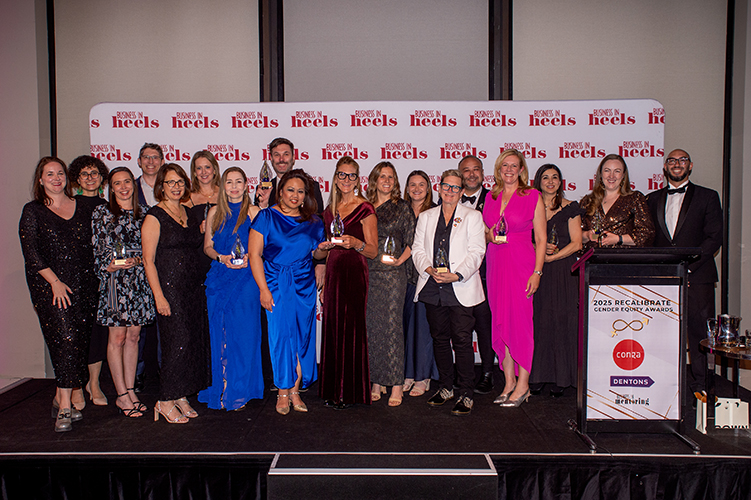
Recognising the 2025 Gender Equity Awards Individual Winners
Policies and strategies set the frame, people bring them to life.
At the 2025 Gender Equity Awards we celebrated not only organisations, we also recognised the individuals who turn principles into everyday practice. These leaders call out bias, redesign processes, support colleagues and keep equity on the agenda when it would be easier to look away.
Here are the individuals honoured this year, and why their roles matter.
Individual winners
- Best CEO or Board Member, Sarah Hunter
- Best Diversity and Inclusion Manager, Jack Meehan
- Best Executive Manager, Hayley Crimmins
- Best Manager, Devina Chatterji
- Best Employee, Zuli Posada
Hall of Fame honourees
- Lisa Annese, CEO, Chief Executive Women
- Her Excellency the Honourable Sam Mostyn AC, Governor General of Australia
Best CEO or Board Member, Sarah Hunter
A CEO or board member can either be a bottleneck or a force multiplier. Sarah Hunter was recognised for using her position to accelerate, not stall, progress.
From the nominations it is clear that Sarah does more than sign off policies. She visibly backs gender equity, listens to employee voice and supports the teams doing the hard work of implementation. She treats equity as part of organisational performance, not just an item in the annual report.
Her leadership sends a simple message, this matters here. When the most senior leaders are prepared to be held accountable for progress, other leaders follow.
Best Diversity and Inclusion Manager, Jack Meehan
Diversity and inclusion managers often sit at the point where ambition meets reality. Jack Meehan was recognised for building structures that make inclusion part of how the organisation operates, rather than a series of one off initiatives.
Jack’s work spans strategy, governance and culture. It involves translating research and legislation into practical frameworks, partnering with HR, safety and legal teams, and working alongside employee networks to ensure that lived experience shapes decisions.
The impact of this kind of role is often felt in the details, the language in a policy, the questions added to a recruitment process, the support put around someone returning from leave. Jack represents the many practitioners quietly making workplaces safer and fairer, one decision at a time.
Best Executive Manager, Hayley Crimmins
Executive managers sit at the critical layer between strategy and frontline. Hayley Crimmins was recognised for making equity a lens for every decision, not a separate agenda.
From budgeting and workforce planning to team structures and project allocation, Hayley models how to embed equity into day to day leadership. She lifts others into stretch opportunities, backs flexible work arrangements and insists that inclusion is part of what “good performance” means.
Executives like Hayley prove that inclusive leadership is not at odds with commercial outcomes, it is a pathway to better results and more sustainable teams.
Best Manager, Devina Chatterji
Most people experience their organisation through their immediate manager, which makes this category especially important.
As Best Manager, Devina Chatterji was recognised for creating a team environment where people feel safe to speak up, share caring responsibilities and be themselves. She pays attention to who is heard, who gets credit and who is overlooked, and she course corrects when needed.
Managers like Devina turn organisational intent into lived experience. When frontline leaders get equity right, everything feels different, recruitment, retention, innovation and wellbeing all improve.
Best Employee, Zuli Posada
You do not need a big title to have a big impact.
Best Employee winner, Zuli Posada, shows how individual contributors can be powerful changemakers. Whether it is noticing when someone is excluded, suggesting a better way to run a process or volunteering to support a new initiative, these actions add up.
Employees like Zuli often act as informal connectors and culture carriers. They model allyship, mentor peers and bring ideas forward with courage. Their influence reaches far beyond their job description.
Hall of Fame, Lisa Annese
This year, Lisa Annese, CEO of Chief Executive Women, was inducted into the Gender Equity Awards Hall of Fame.
Over many years, Lisa has built a strong evidence base for diversity and inclusion, translated research into practical tools and kept the spotlight on the structural barriers that hold women back. Through her leadership she has helped organisations understand that diversity is not just about representation, it is about how decisions are made, who gets access to opportunity and how we share care.
At Chief Executive Women, she leads a membership of senior leaders who have the power to reshape workplaces across Australia. Her work continues to influence policy, practice and public conversation.
Hall of Fame, Her Excellency the Honourable Sam Mostyn AC
Her Excellency the Honourable Sam Mostyn AC, Governor General of Australia, was also inducted into the Hall of Fame.
Sam has long been a champion for gender equality, climate action, the care economy and inclusive leadership. Across her corporate, community and public roles she has consistently used her influence to lift others, particularly women and marginalised groups.
Her advocacy has helped reframe care and flexibility as economic issues, not just personal choices, and has encouraged organisations to see gender equity as central to national prosperity. Her induction acknowledges a sustained contribution over many years and her ongoing role as Governor General.
Why individual recognition matters
It is tempting to think that change is all about systems and policies. They are vital, and the organisational winners show that. However nothing shifts without people who are prepared to act differently.
These individual winners remind us that:
- CEOs and board members set the tone and the pace
- Diversity and inclusion practitioners turn ambitions into frameworks
- Executive and line managers make or break the everyday experience
- Employees at every level can influence the culture around them
If you recognise people like this in your own organisation, tell them. Nominate them. Support them. They are the ones who make equity real.