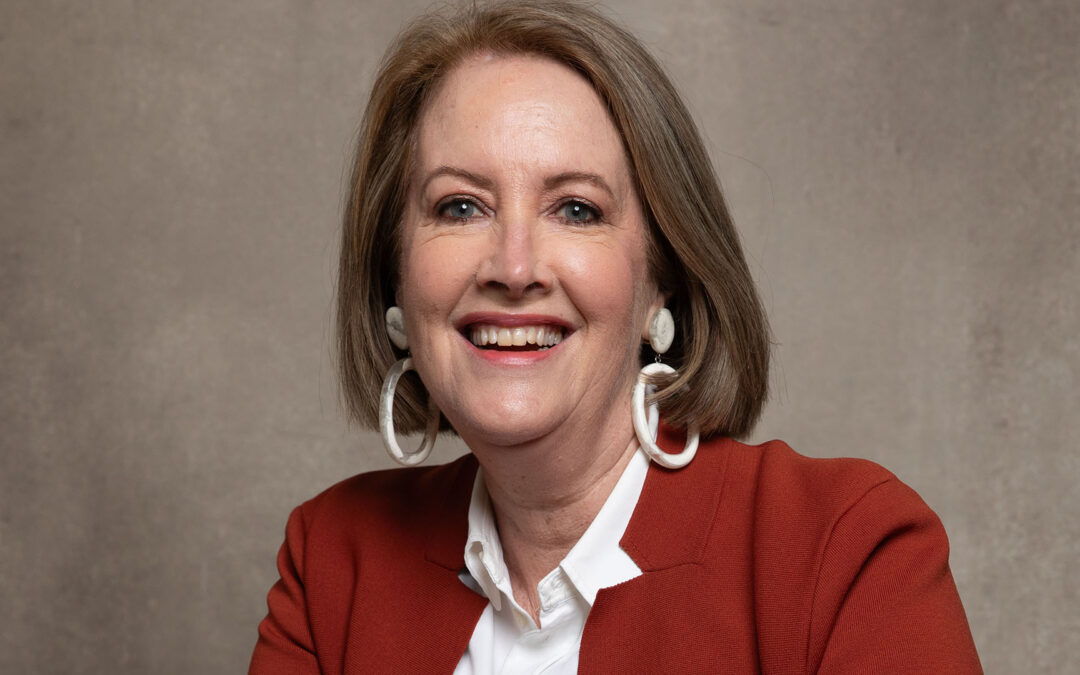
The achievements Elizabeth Broderick AO is proudest of, and the people who made them possible
When Elizabeth Broderick AO reflects on the achievements of which she is most proud, she is quick to resist the suggestion that any of them belong to her alone.
Transformational change, she believes, takes a team, a village and, often, generations of people building on one another’s work. At different times, her role has been to act as a catalyst, bring the right people together, create the conditions for progress, or support and encourage others to carry the work forward.
That philosophy has shaped some of Australia’s most significant advances in gender equality, including paid parental leave, the establishment of the Champions of Change Coalition, greater transparency around gender equality data and the treatment of women within the Australian Defence Force.
Yet, alongside these public achievements, Elizabeth counts raising her children among the things of which she is most proud.
Together, these stories reveal a woman who has never viewed leadership as standing at the front and claiming the credit. Instead, she has used her influence to help others see what is possible, then encouraged them to play their part in making it happen.
Paid parental leave, a reform built over generations
Australia’s national paid parental leave scheme followed decades of advocacy by women’s organisations, unions, researchers, community groups, political leaders and workplace equality advocates.
As Australia’s Sex Discrimination Commissioner, Elizabeth was a prominent supporter of the reform. She helped build momentum, elevate the issue and keep it on the national agenda.
Paid parental leave was not simply a new workplace entitlement. It represented an important shift in how Australia understood caring, employment and economic participation.
For generations, the arrival of a child had disproportionately interrupted women’s careers, reduced their earnings and affected their long-term financial security. Paid parental leave helped establish that caring for a child was not solely a private responsibility to be absorbed by women and families. It was an issue with consequences for workplaces, communities and the national economy.
Elizabeth does not claim that the reform was hers. She recognises the advocates who had worked towards it for decades, the families whose experiences demonstrated why it was needed, and the policymakers who ultimately turned advocacy into legislation.
Her role was part of a much larger story, but it was an important part.
Bringing those with power into the work
The establishment of the Male Champions of Change in 2010 is perhaps the clearest example of Elizabeth acting as a catalyst.
When the initiative began, much of the work of advancing gender equality was still being carried by women, including women with relatively limited power to change the systems around them.
Elizabeth recognised a fundamental problem with that model. Women could not be expected to dismantle structural inequality on their own. The leaders with the greatest authority over recruitment, promotion, pay, workplace culture and organisational priorities had to become personally involved.
She brought together some of Australia’s most influential male chief executives and leaders. Rather than asking them to endorse gender equality from a distance, she challenged them to listen, examine their own organisations and use their power to create change.
As the initiative grew it evolved into the Champions of Change Coalition, a coalition of both men and women leaders. Its strength has never rested with one founder or one group of prominent leaders. It has depended on the women who shared their experiences, the executives willing to confront uncomfortable evidence, and the teams that translated commitments into practical action.
Elizabeth helped assemble the village. Its members then had to do the work.
Standing behind the numbers
One of the Coalition’s most significant contributions has been its commitment to measurement and public accountability.
Its annual reporting has become one of the largest voluntary disclosures of workplace gender equality measures in the world, bringing together data from hundreds of leaders and organisations.
For years, organisations could express support for gender equality without demonstrating whether women were being recruited, promoted, retained, paid equitably or appointed to positions of influence.
Data changed that conversation.
It made it harder to confuse activity with progress and harder for organisations to rely on individual success stories while ignoring broader patterns of inequality.
The Coalition’s commitment to standing behind its numbers reflected Elizabeth’s belief that good intentions were not enough. Leaders needed to understand what was happening inside their organisations, disclose their results and accept responsibility for improving them.
Bringing gender pay gaps into public view
That belief in transparency can also be seen in Elizabeth’s pride at the public release of individual employer gender pay gaps.
When employer level gender pay gap data was published in Australia through the Workplace Gender Equality Agency, employees, boards, investors and the wider community gained a clearer view of what was happening inside organisations.
Publishing the figures did not eliminate inequality, but it made the issue visible. Once an organisation’s gender pay gap could be seen and compared, leaders faced new questions. What was driving the gap? Were women concentrated in lower paid roles? Were men more likely to hold senior positions? Were recruitment, promotion and remuneration decisions contributing to the result?
Elizabeth does not position herself as the person who delivered that final reform. Many advocates, policymakers, public servants, researchers and workplace leaders contributed to the journey.
Her pride lies in seeing a principle she had long championed become part of Australia’s accountability framework. Organisations should not simply say they support equality. They should be prepared to show their results.
A changing Australian Defence Force
Elizabeth also speaks with pride about the progress made by the Australian Defence Force.
During her time as Sex Discrimination Commissioner, she led a major review into the treatment of women in the ADF. The work required women and men serving across Defence to speak honestly about culture, opportunity, leadership and their experiences inside one of Australia’s most traditionally male dominated institutions.
A review can identify problems and recommend change, but it cannot transform an institution on its own.
That required senior leaders prepared to listen, personnel willing to challenge established practices, women courageous enough to share their experiences, and teams committed to implementing reforms over many years.
Women now make up close to one in five members of the Australian Defence Force. Their participation, visibility and leadership have increased significantly, although more progress is still needed.
The symbolism is especially powerful today. Australia’s Governor General, Sam Mostyn AC, is a woman and, in that role, serves as Commander in Chief of the Australian Defence Force. Lieutenant General Susan Coyle was appointed as Australia’s 42nd Chief of Army on 1 July 2026, the first woman to hold the role.
For Elizabeth, this progress is not evidence of one successful review. It is evidence of what can happen when an institution continues the work long after a report has been delivered. Her pride is in the Australian military itself, in the people who listened, learned, led and persisted.
The achievement closest to home
For all her public influence, Elizabeth’s list of proudest achievements would be incomplete without her husband and children.
Public leadership is often measured through legislation, institutions, reports and reforms. Raising children is less visible, yet it can demand just as much courage, patience, adaptability and hope.
Her children are also a reminder that gender equality is not an abstract policy ambition. It is about the lives future generations will be able to lead, the choices open to them and the expectations they carry into their relationships, families, workplaces and communities.
They have also provided something equally valuable, perspective. Titles and public recognition fall away at home. Children have a useful way of reminding even the most accomplished leaders that they are human.
A catalyst, not a sole author
Elizabeth Broderick’s legacy cannot be reduced to a collection of policies or institutions.
Her particular contribution has been helping people recognise their own capacity and responsibility to create change.
Sometimes she has been the precursor, preparing the ground before reform became possible. Sometimes she has been the catalyst, bringing together people who might never otherwise have acted collectively. Sometimes she has been the supporter and encourager, standing behind those with the authority or opportunity to take the next step.
In each case, she has understood something essential about lasting change, it rarely belongs to one person.
Elizabeth helped create momentum, but the village turned that momentum into progress.
That may be the most fitting way to recognise her Hall of Fame status, not as the sole author of change, but as one of Australia’s most influential catalysts for it, a leader who brought people together, encouraged them to use their power and helped make achievements once considered impossible feel inevitable.